How to Start an Ayurvedic Products Brand Online on Shopify in India
Ayurveda is one of India's fastest-growing online categories. Here is how to take an Ayurvedic or herbal products brand online with Shopify, from licences and labels to product pages that build trust.
More and more Indians now buy churnas, herbal oils, chyawanprash and rasayanas online, and many of them are searching for trusted brands outside the big names. If you make or sell Ayurvedic products, a Shopify store lets you reach them across India, with your own brand and your own prices.
This guide explains how to start an Ayurvedic products brand online with Shopify, step by step.
1. Decide what kind of product you sell
Ayurvedic products fall under different rules depending on what they are and what you say about them:
- Ayurvedic medicines (classical formulations and proprietary Ayurvedic medicines) come under the Drugs and Cosmetics Act, 1940 and its rules. Making them needs a manufacturing licence from your State Licensing Authority for AYUSH.
- Herbal cosmetics such as hair oils, face packs and soaps sold for beauty use follow the cosmetics rules.
- Herbal food supplements and teas may come under FSSAI.
Rules change and every product is different, so check your category and licences with a regulatory consultant before you launch.
2. Make it yourself or with a manufacturer
You don't need your own factory to start. Many brands begin with a licensed contract manufacturer (third-party or loan licence manufacturing), who makes the product under your brand name. Ask for their licence, their GMP certification and test reports for every batch.
3. Get your labels right
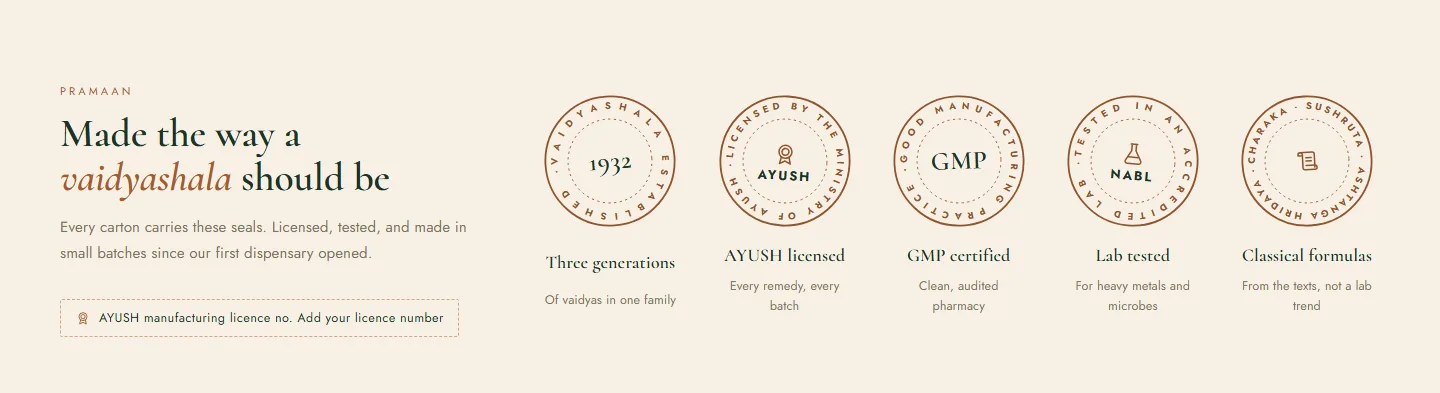
Your label and your product page should both show the product name, ingredients and their quantities, dose, batch number, manufacturing and expiry dates, the manufacturer's name and address and the licence number. Shoppers compare these online, and clear details build trust.
4. Be careful with claims
The Drugs and Magic Remedies (Objectionable Advertisements) Act, 1954 bans advertisements that claim to cure certain diseases, and the Ministry of AYUSH acts against misleading ads. On your website:
- Describe what a product supports ("supports restful sleep") rather than promising a cure.
- Show results as typical, not guaranteed.
- Add a disclaimer: Ayurvedic support is not a substitute for medical treatment, and pregnant or nursing women or people on medication should ask their doctor first.
- Only show reviews from real customers.
5. Organise your store by concern and dosha
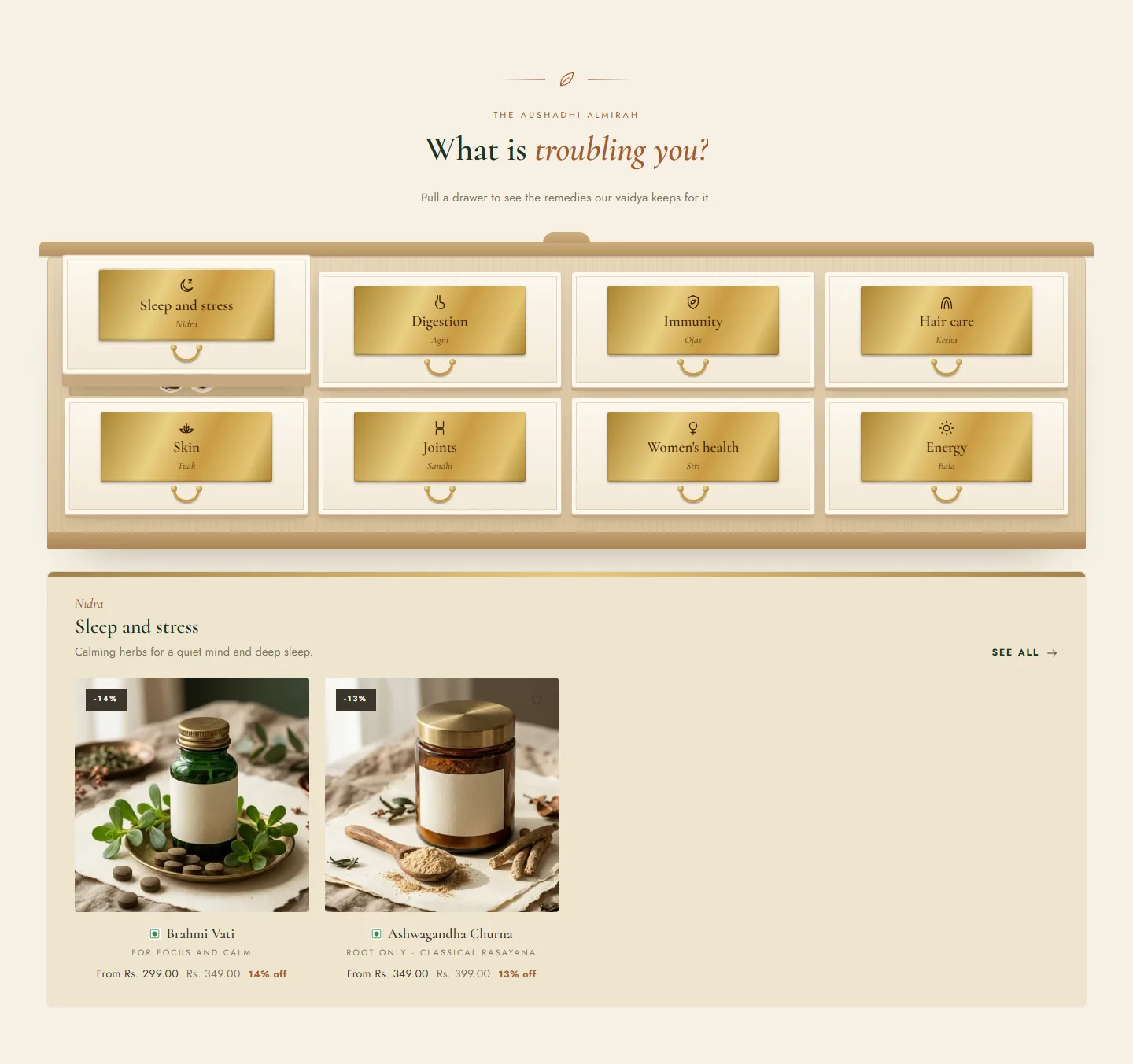
Most shoppers don't know the name Ashwagandha Churna; they know they can't sleep. Arrange your collections by concern (sleep, digestion, immunity, hair, skin, joints) and, if your audience knows Ayurveda, by dosha. A short dosha quiz helps new shoppers find where to start.
6. Build product pages that answer every question
An Ayurvedic product page should explain:
- Key herbs: Sanskrit and botanical names and what each one does.
- How to take it: dose, time of day, what to take it with (warm water, milk, honey) and for how long.
- Who it suits: the dosha or body type, and who should avoid it.
- What's not in it: no steroids, mineral oil, synthetic fragrance or fillers, if that is true.
- Shelf life and storage, and how long each pack lasts.
- The source: the classical text a formula comes from, or research about the herbs.
7. Offer consultations
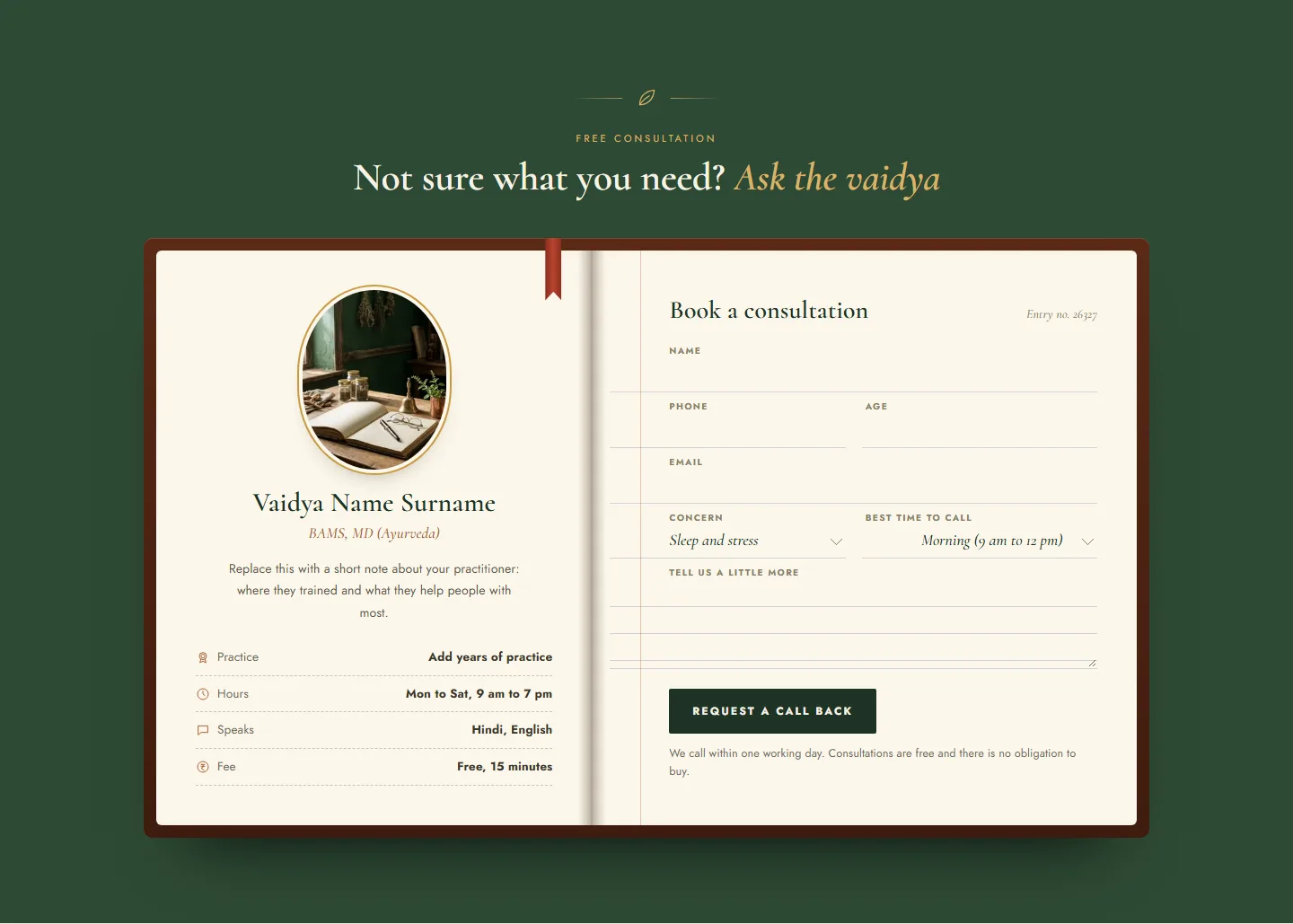
Many buyers want to ask "will this suit me?" before they order. A vaidya consultation by WhatsApp, phone or video turns those doubts into sales and repeat customers. Put a consultation form on your store, with the shopper's concern and preferred time.
8. Set up payments, shipping and GST
- Payments: add Razorpay, PayU or Cashfree for UPI and cards, and decide whether to offer cash on delivery.
- Shipping: oils and liquids need leak-proof packing. Shiprocket or Delhivery give you pan-India delivery.
- GST: register for GST and set the right tax rate for each product type in Shopify. Your CA can confirm the rate for your products.
9. Choose a theme made for Ayurveda
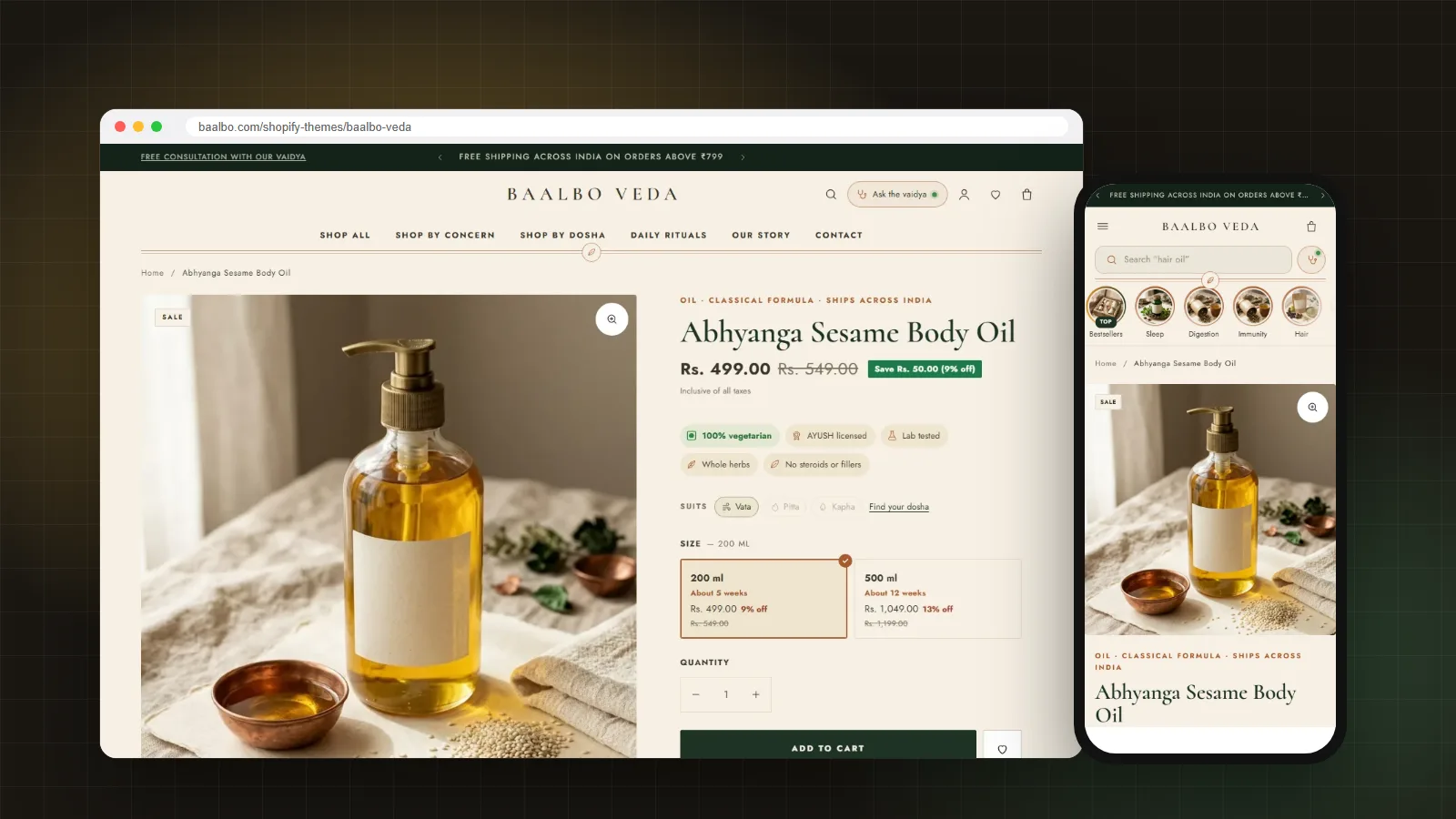
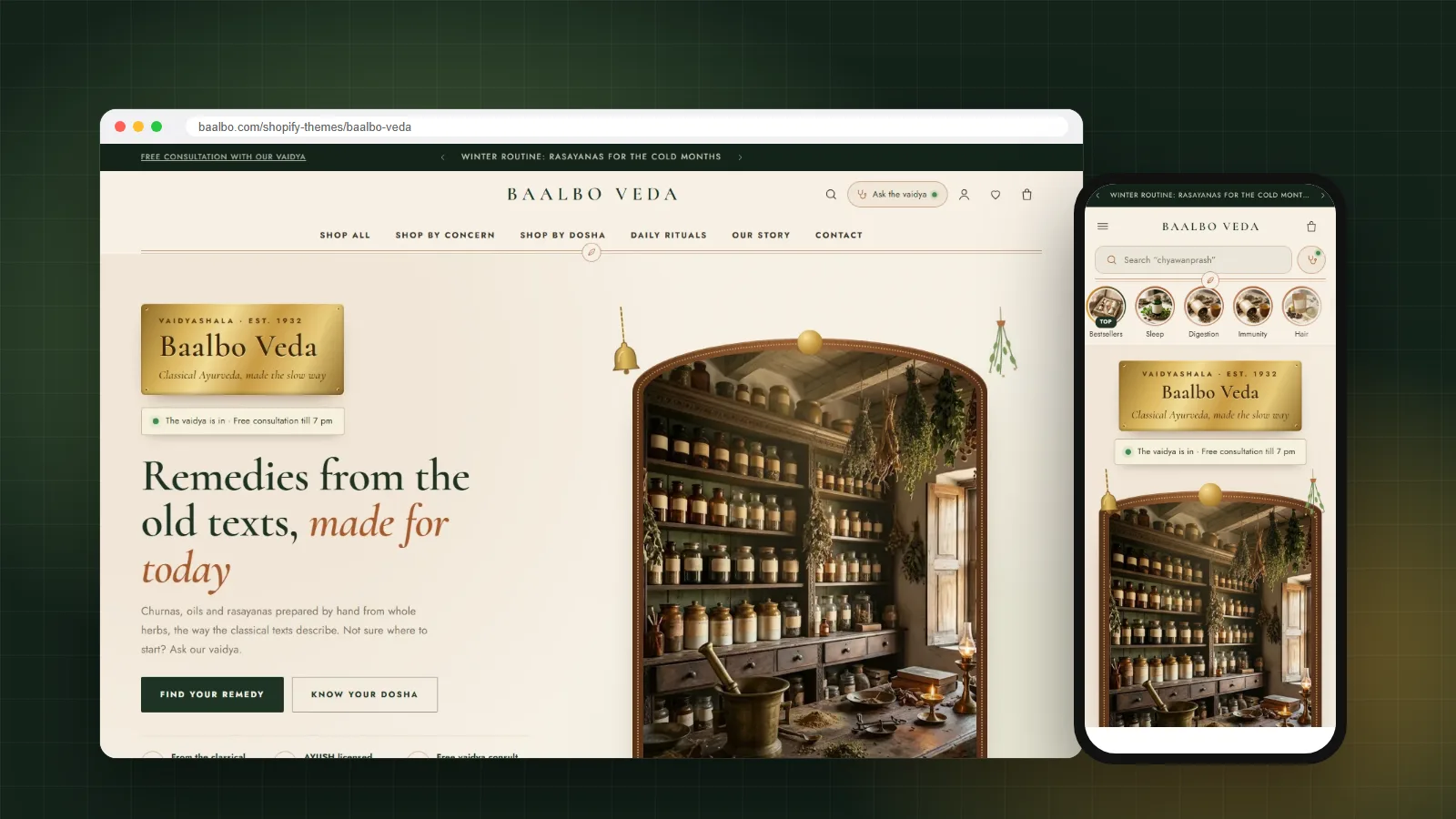
A general Shopify theme won't have a dosage card, key herbs, dosha guidance or a consultation section, so you would need several apps or custom code. We built Baalbo Veda for Ayurvedic and herbal brands, with a herb cabinet to shop by concern, a dosha quiz, a prescription-style dosage card, credentials seals and a vaidya consultation section, in 78 sections. See all our Shopify themes for Ayurveda and herbal brands.
10. Grow with content and trust
Write about doshas, seasonal routines (ritucharya) and the herbs you use. Ayurveda shoppers read before they buy, and helpful articles bring them from Google. Share your process, your vaidya and your sourcing on Instagram and WhatsApp, and ask happy customers for honest reviews.
Frequently asked questions
Do I need a licence to sell Ayurvedic products online?
Ayurvedic medicines need a manufacturing licence, held by you or your contract manufacturer. Cosmetics and food supplements follow their own rules. Check your products with a regulatory consultant.
Can I sell Ayurvedic products on Shopify?
Yes. Shopify works for Ayurvedic and herbal brands in India, with Indian payment gateways, GST settings and couriers.
How much does it cost to start an Ayurvedic store on Shopify?
Shopify's monthly plan, a theme and your packaging and stock are the main costs. Baalbo Veda costs ₹3,999 for one store, and our team can set it up for ₹3,999.
Starting an Ayurveda brand? Open the Baalbo Veda live demo, or talk to our team.

Written by
Sukesh Kumar
Founder, CEO & Director, BaalBo Infotech
Sukesh founded BaalBo Infotech in Patna in 2023 and leads a team building websites, apps and online stores for businesses in India and abroad.
More about Sukesh